Back to Blog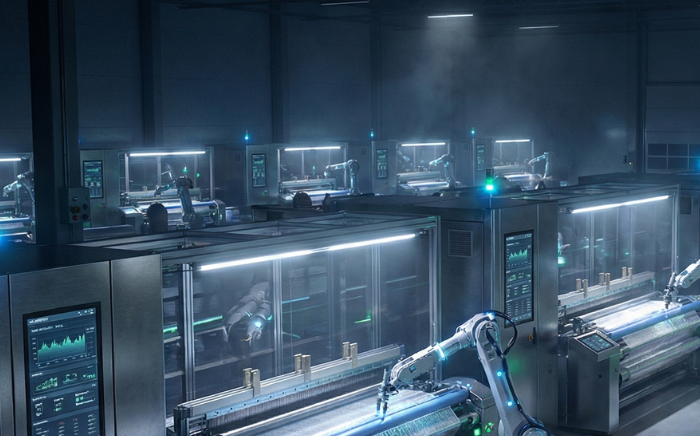
The textile industry has historically relied on labor-intensive manufacturing processes. From weaving and cutting to sewing and quality inspection, many stages of garment production require precise manual work. While automation has transformed other industries, textiles have often lagged behind due to the complexity of handling flexible materials.
Today, advances in robotics and artificial intelligence are beginning to change that reality. Automated systems capable of manipulating delicate fabrics, stitching complex patterns, and inspecting garments with machine vision are entering textile factories around the world.
These technologies are ushering in a new era of smart manufacturing for fashion and textiles.
The Technology Behind Textile Robotics
Modern textile robotics combines several advanced technologies:
• Robotic arms capable of handling soft materials
• Machine vision systems that detect fabric patterns and defects
• AI algorithms that optimize production processes
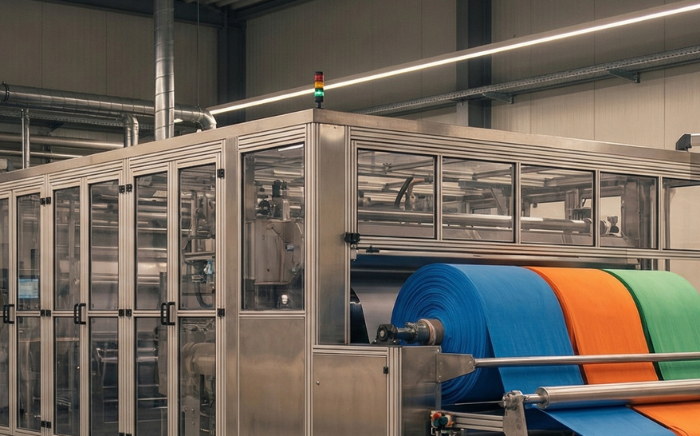
• Automated cutting and sewing systems
Unlike traditional industrial robots designed for rigid materials, textile robots must handle flexible fabrics that shift and stretch. Machine learning models help these systems adapt to variations in texture, thickness, and movement.
The result is a new generation of production tools capable of performing tasks that once required human dexterity.
Benefits for Manufacturers and Brands
Robotic automation offers several advantages for textile manufacturers.
Production efficiency increases as automated systems operate continuously with consistent precision. This reduces errors and improves product quality.
Automation can also support localized manufacturing, allowing brands to produce garments closer to consumer markets rather than relying solely on overseas factories.
Additionally, robotics can improve worker safety by handling repetitive or hazardous tasks while allowing human employees to focus on design, quality control, and technical supervision.
Challenges to Industry Adoption
Despite these benefits, implementing robotics in textile production is not without obstacles.
Initial investment costs remain significant, and integrating automation into existing factories requires careful planning.
Some tasks, particularly those involving highly complex or delicate fabrics, still require human expertise. Rather than replacing workers entirely, automation will likely reshape roles within the industry.
Training and workforce development will therefore be essential as factories adopt new technologies.
Toward the Smart Factory
As robotics and AI continue to advance, textile factories may evolve into highly connected production environments. Machines, sensors, and digital systems will communicate continuously, optimizing processes and responding dynamically to demand.
In this vision of the smart factory, automation does not eliminate human creativity but enhances it — allowing designers and engineers to focus on innovation while intelligent systems manage production.
The future of textile manufacturing may be woven not only by skilled hands but also by intelligent machines.